
Analysis of Magnetization Curve of Ferrite Core for Transformer

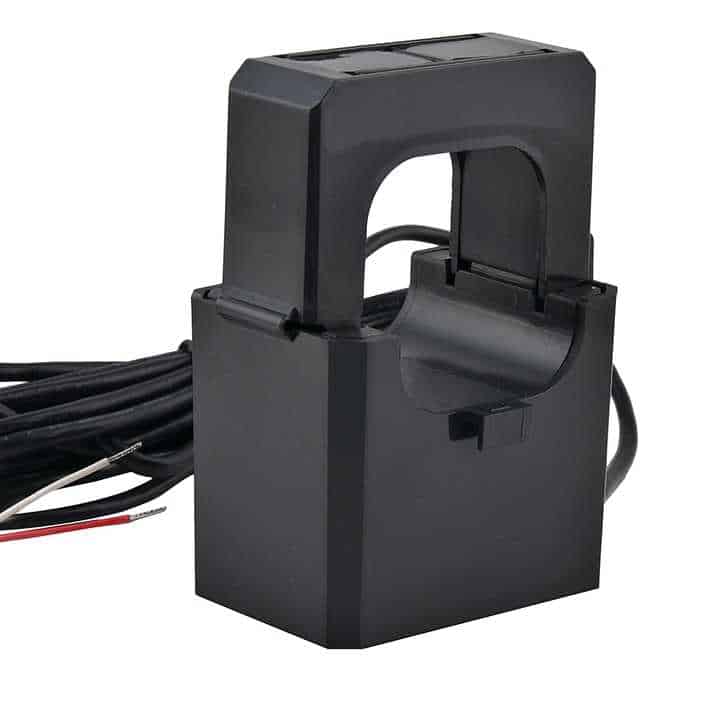
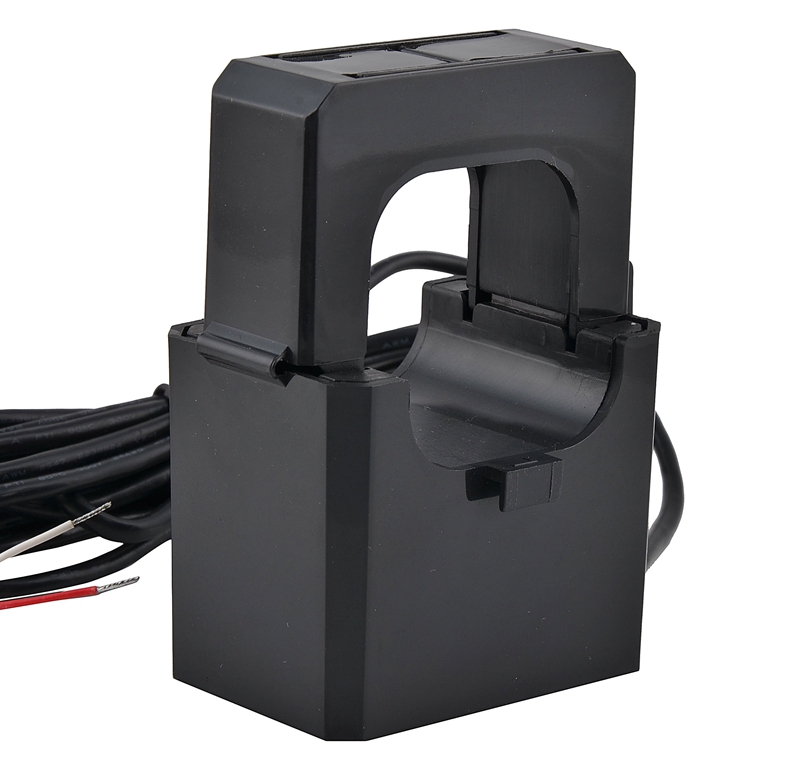
Ferrite is a material that is relatively cheap in magnetic materials, and has good magnetic permeability and magnetic saturation strength, so it is now used in many current transformers, and in open-close current transformers, it is often based on customers. Therefore, we choose ferrites of different materials, such as PC40 and high-conductivity ferrite. We know that PC40 has a certain magnetic permeability and high magnetic induction intensity, while high-conductivity ferrite has a low magnetic induction intensity. However, with high permeability, a current transformer with better linearity but lower current range or load capacity can be produced, but how do these two materials perform in the high and low temperature environment of the current transformer? This article is to make such a discussion.

This test uses open-close current transformers, CT312 and CT313 are used respectively, two of each material, the number of turns is 2000T, (the number of compensation turns has been considered) respectively at 0, -10, -20 , -30, -40, -50, 20, 40, 60, 80 ℃ to test the accuracy data and magnetization curve data of the transformer, the data volume is large and not easy to be intuitive, so for the convenience of analysis, the data is processed into a typical curve.

In order to be relatively accurate in this test, the pairwise comparison method is used to refer to each other, so all the test data are compared in double numbers, and the magnetization curve is compared with the transformer data. Two samples of the same specification and material are prepared to prevent the test data mistaken.

Share:

Facebook
X
LinkedIn
WhatsApp
Email

More Posts

How Magnetic Hysteresis Characteristics Improve Current Transformer Performance

How Magnetic Hysteresis Characteristics Improve Current Transformer Performance: Engineering Insights from ZTC

Allen Yang Marketing Engineer & Current Transformer Application Expert Helping You Select the Right CTs To Succeed Your Projects Current Transformers For Electrical Safety Current Transformers For Electric Metering How Magnetic Hysteresis Characteristics Improve Current Transformer Performance: Engineering Insights from ZTC Table of Contents Current transformers (CTs) play a critical

improve gfic stability

How Residual Output Testing Helped Improve Current Transformer Stability

Allen Yang Marketing Engineer & Current Transformer Application Expert Helping You Select the Right CTs To Succeed Your Projects Current Transformers For Electrical Safety Current Transformers For Electric Metering Table of Contents How Residual Output Testing Helped Improve Current Transformer Stability A Practical Engineering Case from ZTC For GFCI products,

learning in JP

How ZTC Successfully Supported a Japanese Industrial Electronics Manufacturer in Transferring Current Transformer Production to China

Allen Yang Marketing Engineer & Current Transformer Application Expert Helping You Select the Right CTs To Succeed Your Projects Current Transformers For Electrical Safety Current Transformers For Electric Metering How ZTC Successfully Supported a Japanese Industrial Electronics Manufacturer in Transferring Current Transformer Production to China Table of Contents Project Background

GFCI Current Transformer Solutions for Electrical Safety Systems

How Xiamen ZTC Technology Helps GFCI Manufacturers Improve Safety, Stability, and Certification Success GFCI Industry Background: Why Leakage Protection Is Becoming More Critical According to the referenced GFCI technical guide, GFCI devices continuously compare the current between live and neutral conductors. Once a leakage imbalance is detected, the system disconnects

Send Us A Message